The system should prepare the decision, not make it
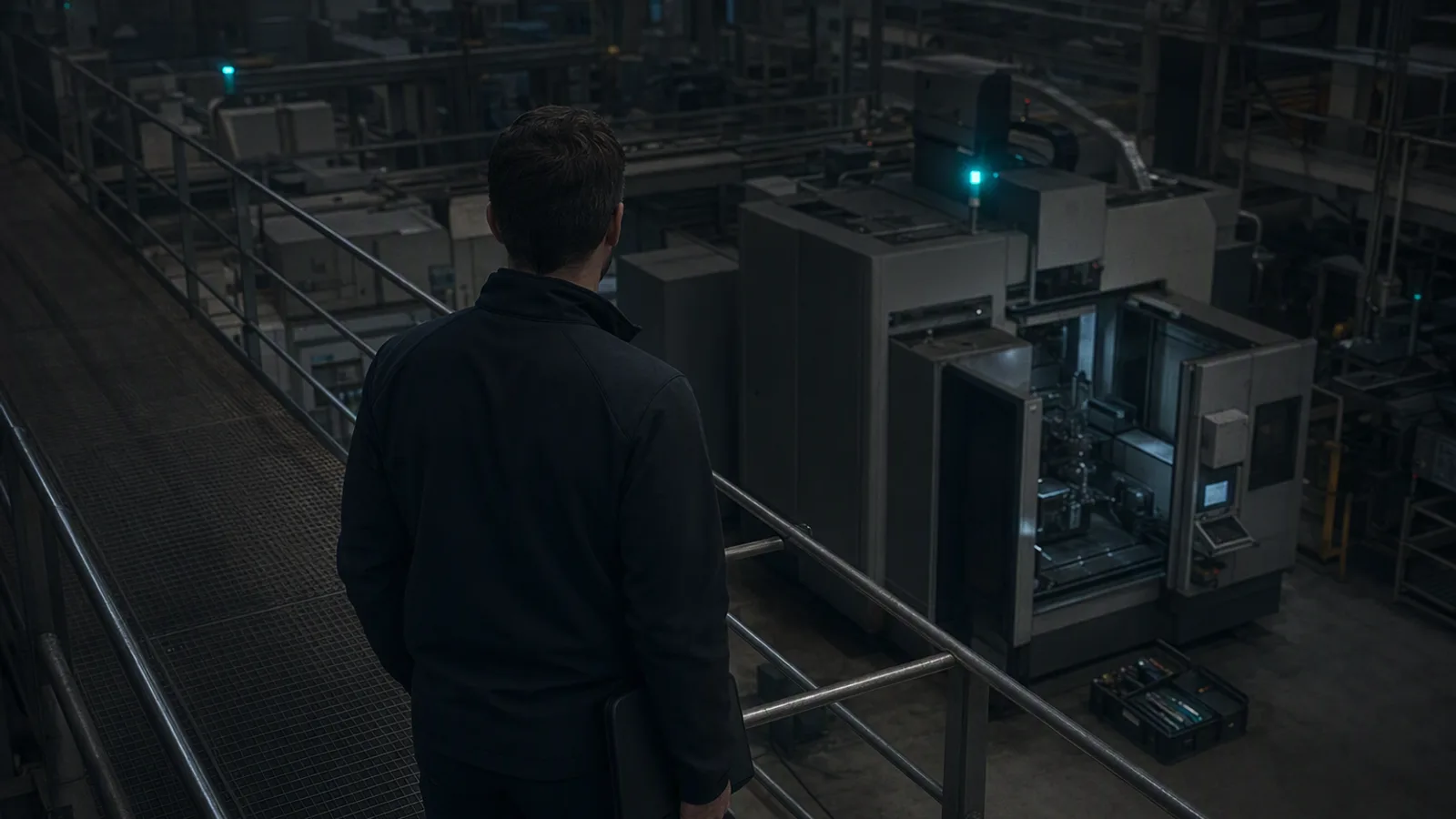
A machine goes down at half past nine. Within a minute, a system could propose a new sequence for the rest of the week: two orders moved to the other line, one split in two, a customer date pushed back by two days.
The proposal might be very good. Whether it gets used depends almost entirely on two things that have nothing to do with how clever it is: whether the planner can see why, and whether the planner is the one who says yes.
Why automatic decisions fail on the floor
The system does not know what the planner knows. That the other line has a new operator this week. That the material for the split order is physically on the floor but has not been booked in. That the customer whose date moves was given that date personally by the owner. A plan that ignores all this is not optimal; it is uninformed.
A black box gets worked around. When a recommendation arrives without its reasoning, the planner has two choices: trust it blindly or redo the work to check it. After the first bad suggestion they redo the work every time, and the system becomes an expensive way of producing a second opinion nobody reads.
Somebody answers for the date. When an order is late, the customer calls a person, not an algorithm. The person who takes that call should be the person who made the decision, with the information that was available at the time.
The floor sees what the data does not. The pallet in the wrong place, the operator about to finish a shift, the fixture that was dropped this morning. No amount of machine data replaces somebody standing in the hall.
What AI is genuinely good for here
None of that is an argument against using AI on a factory floor. It is an argument about where it belongs.
Doing the arithmetic. Recalculating a sequence, its changeovers and the consequences for every downstream date is tedious and easy to get wrong by hand. It is exactly the kind of work a machine should do.
Showing the options. Not one answer but two or three, each with its price: this order late, that extra changeover, this line on overtime.
Explaining itself. Which constraint drove the proposal, which data it used and how old that data is. The planner can then check the one assumption that matters rather than redo the whole calculation.
Noticing early. A gap between plan and actual that keeps growing, a material that will run out on Thursday at the current rate. Raised while there is still time to act, rather than afterwards.
Prepared, then confirmed
The pattern that works is simple to describe. The system reads the floor, prepares the action — a reschedule, a reorder, a held batch, a realistic date — and shows its reasoning. A person confirms it, changes it or rejects it, and that decision is recorded along with everything else.
No date is promised, no batch held and no plan released to the floor without that step. That is not a limit of the technology. It is a choice about who should decide: the person who can see the hall and who will answer for the outcome. Writing to machines is a separate matter, and there the answer is simply no, confirmed or not.
How to judge any AI claim on the floor
When a product promises AI-driven planning, ask to see a recommendation it got wrong, and what the planner saw at the time.
If the answer is a screen showing the reasoning, the data behind it and a person’s decision to override it, you are looking at a tool. If the answer is that it does not get things wrong, or that the reasoning is too complex to show, you are looking at something that will be quietly switched off within a quarter.
- AI
- scheduling
- human in the loop
- decisions