The system says it is finished. The floor says otherwise
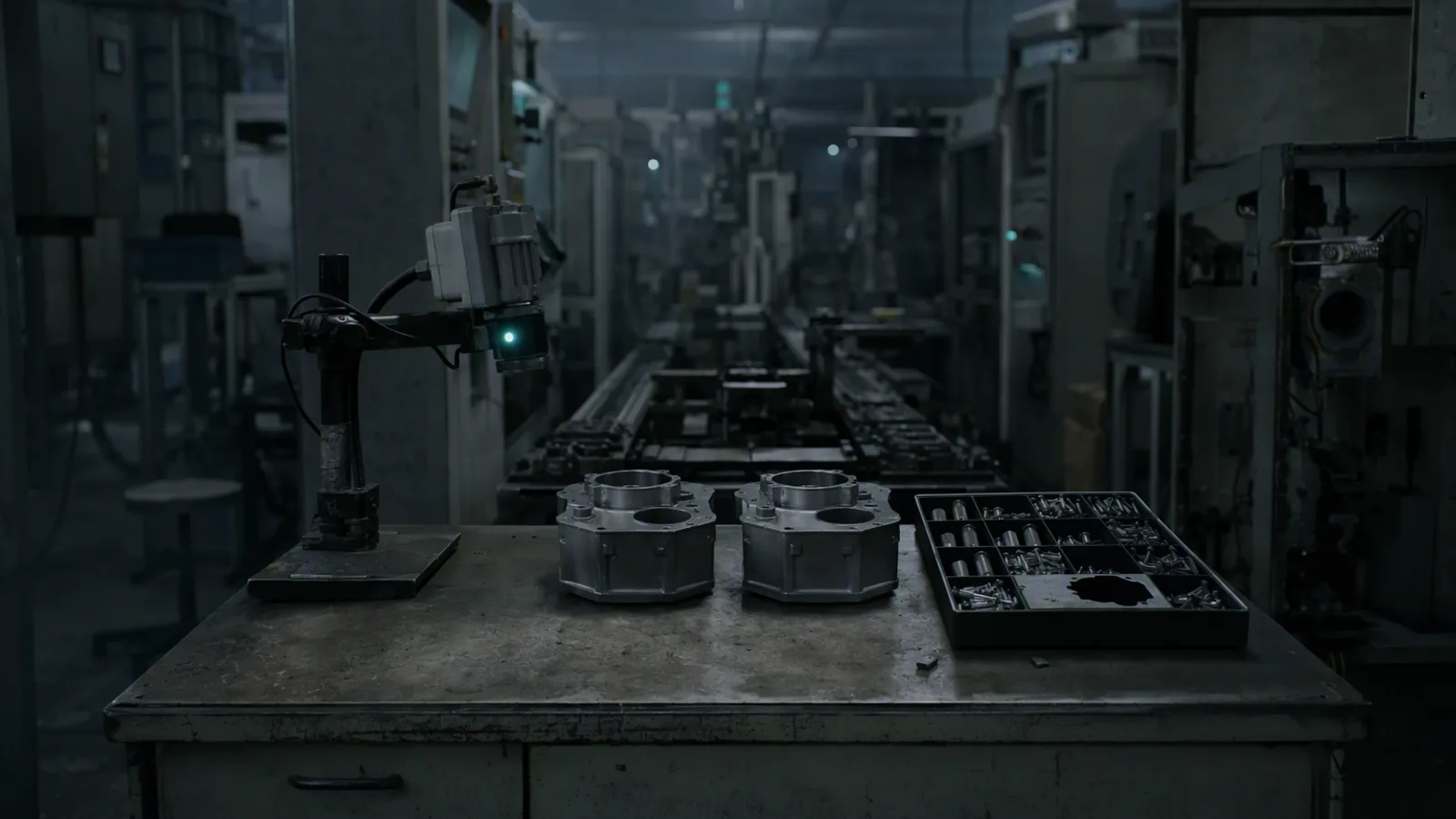
The works order is closed in the system. On the floor, two units are on the rework bench, one is waiting for a part that arrives Thursday, and the line leader knows all of it.
Neither record is dishonest. The office one reflects what was booked; the floor one reflects what is physically true. They diverge because they are updated at different moments by different people for different purposes, and in most plants nobody reconciles them until the month closes.
Where the gap comes from
Booking happens in batches. Operators book at the end of a shift, or when a supervisor collects the sheets, or when somebody gets to a terminal. The system is therefore always behind by somewhere between an hour and a day.
Rework is invisible. A unit that fails and gets fixed frequently never appears as an event. The good count is right at the end, the effort spent is not recorded anywhere, and the cost of quality disappears into general overhead.
Partial completions do not fit. An order is open or closed. The real state — sixty done, eight in progress, two scrapped, four waiting on a component — has no clean representation, so somebody picks the closest available option.
The floor keeps its own record. A whiteboard, a notebook, a spreadsheet on one PC. It is accurate, current and completely invisible to anybody not standing in front of it.
Why it matters more than it looks
Every decision made from the office record is made from stale data. Whether to accept an order for next week, whether to promise a date, whether to start a run or wait for material — all answered with information that is between hours and days old, in a business where hours matter.
The variance report at month end then explains what happened, which is the least useful moment to learn it. By then the promise has been made, the shipment has been missed, or the machine has stood idle.
What actually closes it
Book where the work happens. A scan at the station, a signal from the machine, a tablet at the bench. Not a terminal at the end of the building that requires a walk.
Make the real state representable. Partial quantities, rework, scrap and waiting-on-material as first-class states rather than approximations of open and closed.
Read what already exists. Most equipment counts cycles and knows its own state. That is booking data nobody has to enter, and it is already there.
Show the divergence while it is small. The value is not in a perfect record. It is in the plan and the actual being visible next to each other on the day they start to differ, when somebody can still do something about it.
The measurable version
Pick any open works order and ask two people: the planner at their desk and the line leader on the floor. Write down both answers and the difference between them.
Do it for ten orders. The average difference, in hours or units, is the amount of ignorance every scheduling decision in the plant is currently made with — and it is almost always larger than the office expects and exactly what the floor would have predicted.
- ERP
- shop floor
- data latency
- variance