The cost of quality is filed under overhead
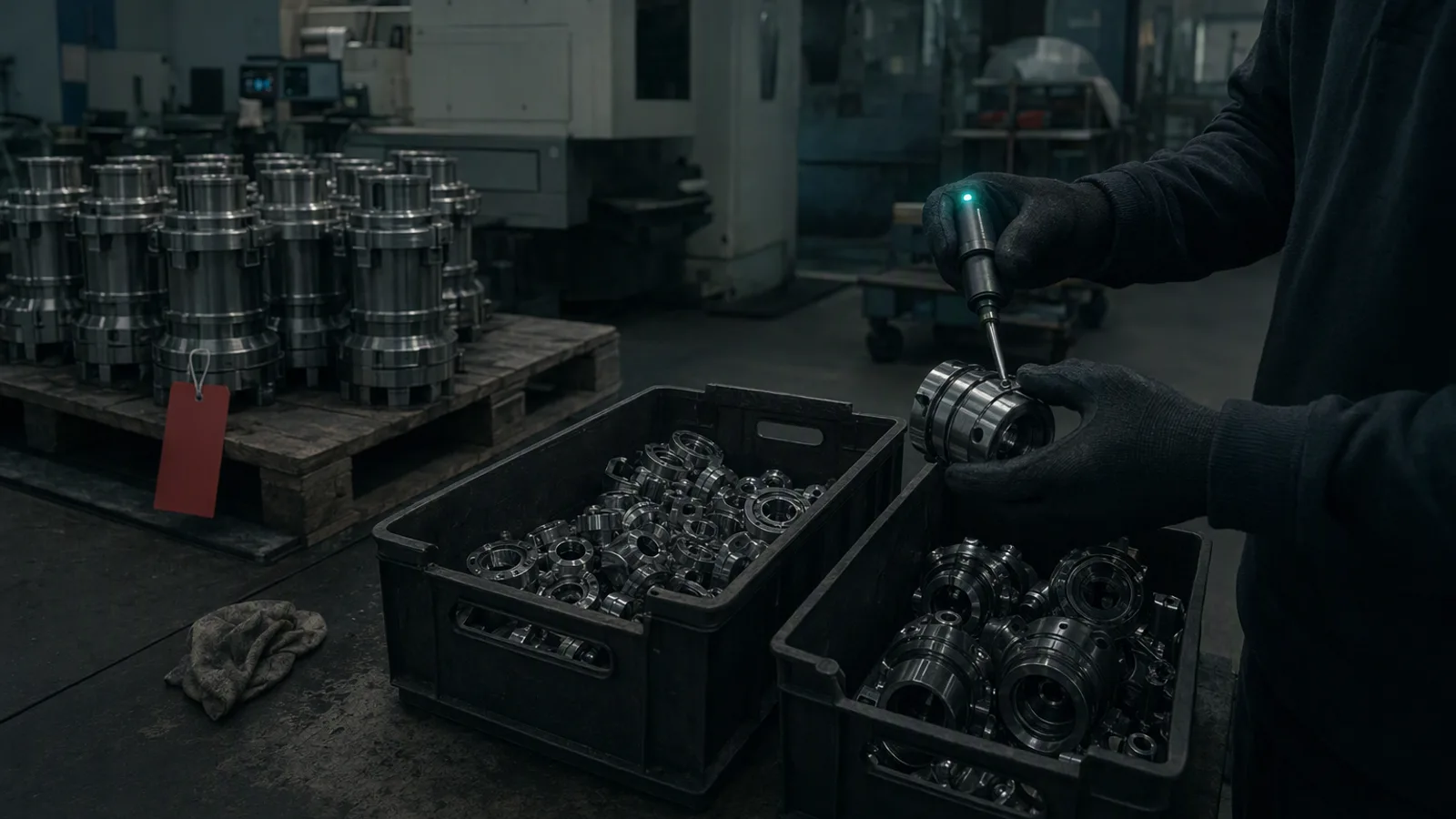
A batch fails final inspection on Thursday. Two people spend Friday morning sorting it, a third reworks twenty units on the bench, and the batch ships on Monday, complete and correct.
In the system, the order shows the standard hours and a good quantity that matches. The nonconformance report is in a binder in the quality office. The sorting time went to the indirect labour line, and the rework went nowhere at all. Three months later the product is still quoted at the same price, because on paper it was made exactly as planned.
Where the cost goes
Quality lives in a different place from production. Nonconformances, deviations and corrective actions are kept by the quality department, in a register, a binder or a separate application. The works order never hears about them.
Rework is not an operation. A routing describes the path a good unit takes. A unit that goes back to the bench is doing something the routing does not contain, so there is nowhere to book the time even when somebody wants to.
Holds are informal. A pallet set aside with a red label is a hold. Unless somebody records it, the system believes the material is available, and the next schedule is built on stock that cannot be used. Or the reverse: material released days ago still sits with its red label, because nobody lifted the hold.
Sorting and extra inspection spread thin. Additional checks after a complaint are done by whoever is free and booked as indirect time. The effort is real; the link to the product that needed it is lost.
Why the averages lie
When the cost of quality is pooled in overhead, it is spread across every product through the overhead rate. Products that run cleanly carry part of the cost of products that do not. The better a plant is at firefighting, the better hidden this is, because the units that finally ship are good.
The result is predictable. The difficult product, the one with the tight tolerance or the demanding customer, looks more profitable than it is. The simple, reliable product looks less profitable than it is. Pricing, make-or-buy and the choice of which customers to chase are then decided on numbers that are quietly upside down.
Nobody is hiding anything. The information simply never landed where the decision is made.
What attaching it to the order looks like
Quality events recorded against the order and the operation. A nonconformance belongs to the order, the operation and, where it matters, the batch it came from. Not to a month.
Rework as a visible state. Units that go back are counted as going back, together with the time it took, rather than disappearing between the first count and the final one.
Holds that the plan respects. Material on hold is not available, and the schedule knows it the moment the label goes on, not when somebody remembers to tell the planner.
A cost per order that includes the bad week. Planned hours, actual hours and the hours spent putting things right, side by side, while the order is still open and the people involved still remember what happened.
None of this needs a new quality system. It needs the quality events that are already being recorded to land on the same object as the production record, at the time they happen.
A question for your next price review
Pick the three products you consider your most profitable and the three you consider your most troublesome. For each, ask quality how many nonconformances it had last year, and ask production how many hours went to sorting and rework.
If nobody can answer per product without going through the binder page by page, then your margins for those six products are estimates — and the estimate is almost certainly kindest to the product that causes the most trouble.
- cost of quality
- nonconformance
- rework
- costing